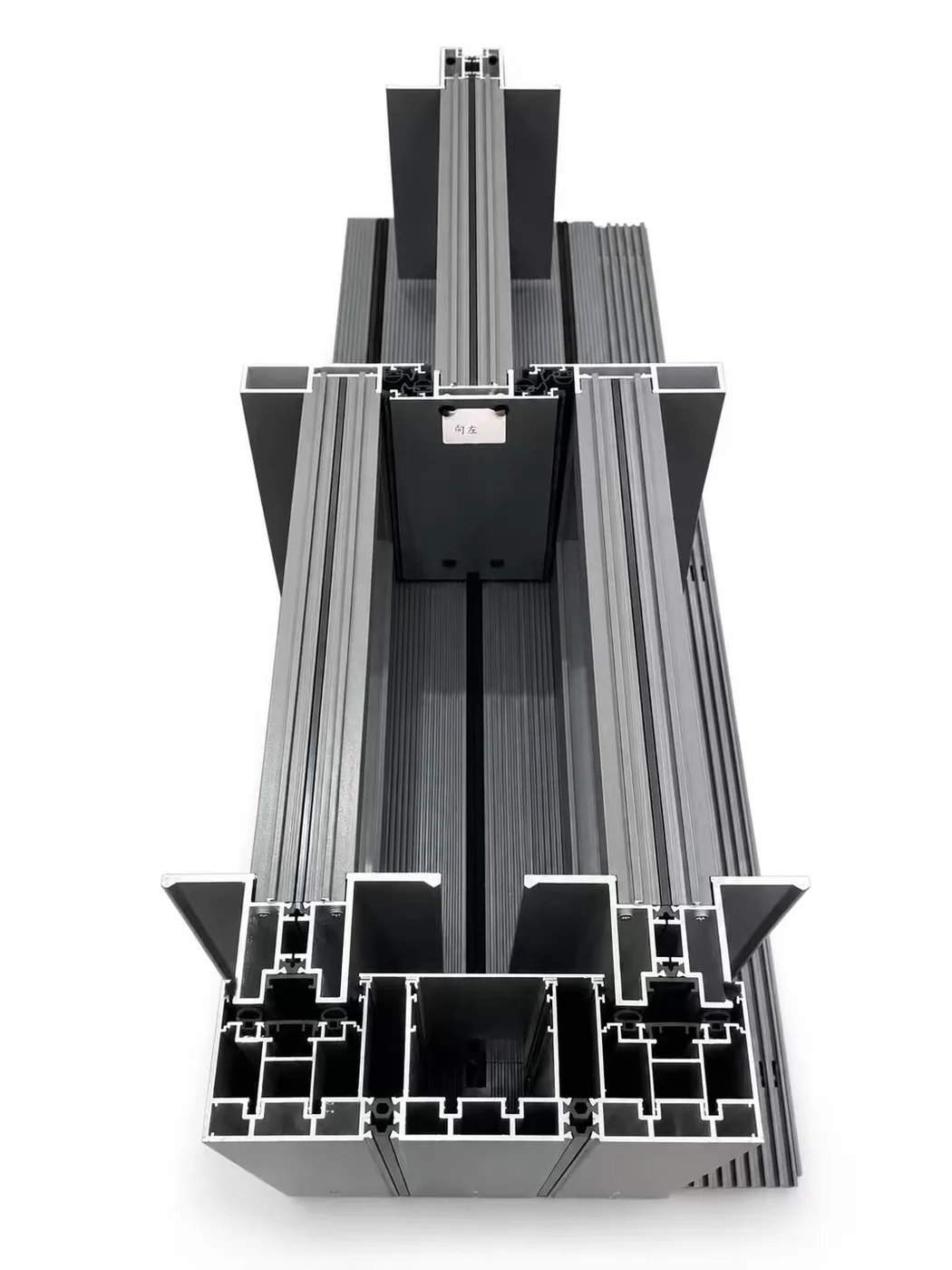
Choosing an aluminum extrusion source factory requires more than comparing price per kilogram. Professional window manufacturers, distributors, contractors and project buyers need to understand how the complete profile system will perform after fabrication and installation.
The MT Flying Xingchen 115 Premium System Window provides a useful evaluation model. Its performance is created by the relationship between frame depth, aluminum wall thickness, thermal breaks, glass support, sealing, hardware and surface finishing.
Start with the exterior window application
An exterior profile faces wind pressure, rain, temperature change, UV exposure, glass weight, structural movement and repeated opening cycles. An interior aluminum section may be selected mainly for appearance and fit, but an exterior casement system must control several environmental loads simultaneously.
Before discussing alloy or finish, provide the factory with the opening size, building height, wind zone, glass build-up, opening method, drainage conditions, target performance and applicable standards. A responsible supplier should use this information to define the system rather than recommend one section for every project.
1. Evaluate the complete extrusion cross-section
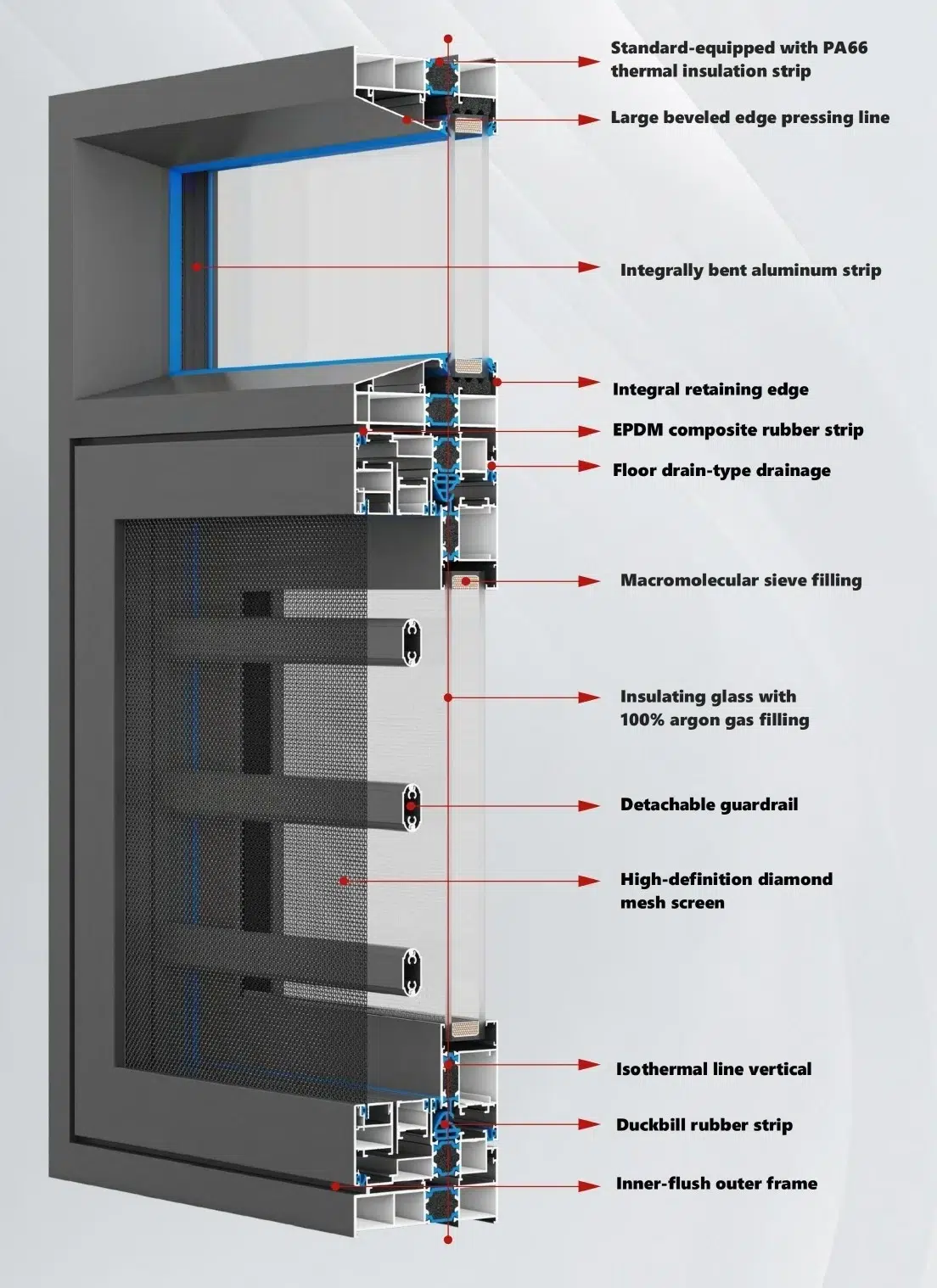
Two extrusions with similar weight can perform differently. A properly engineered cross-section may include structural chambers, screw channels, drainage paths, thermal-break locations, hardware interfaces, reinforcement zones, glass support and multiple sealing channels.
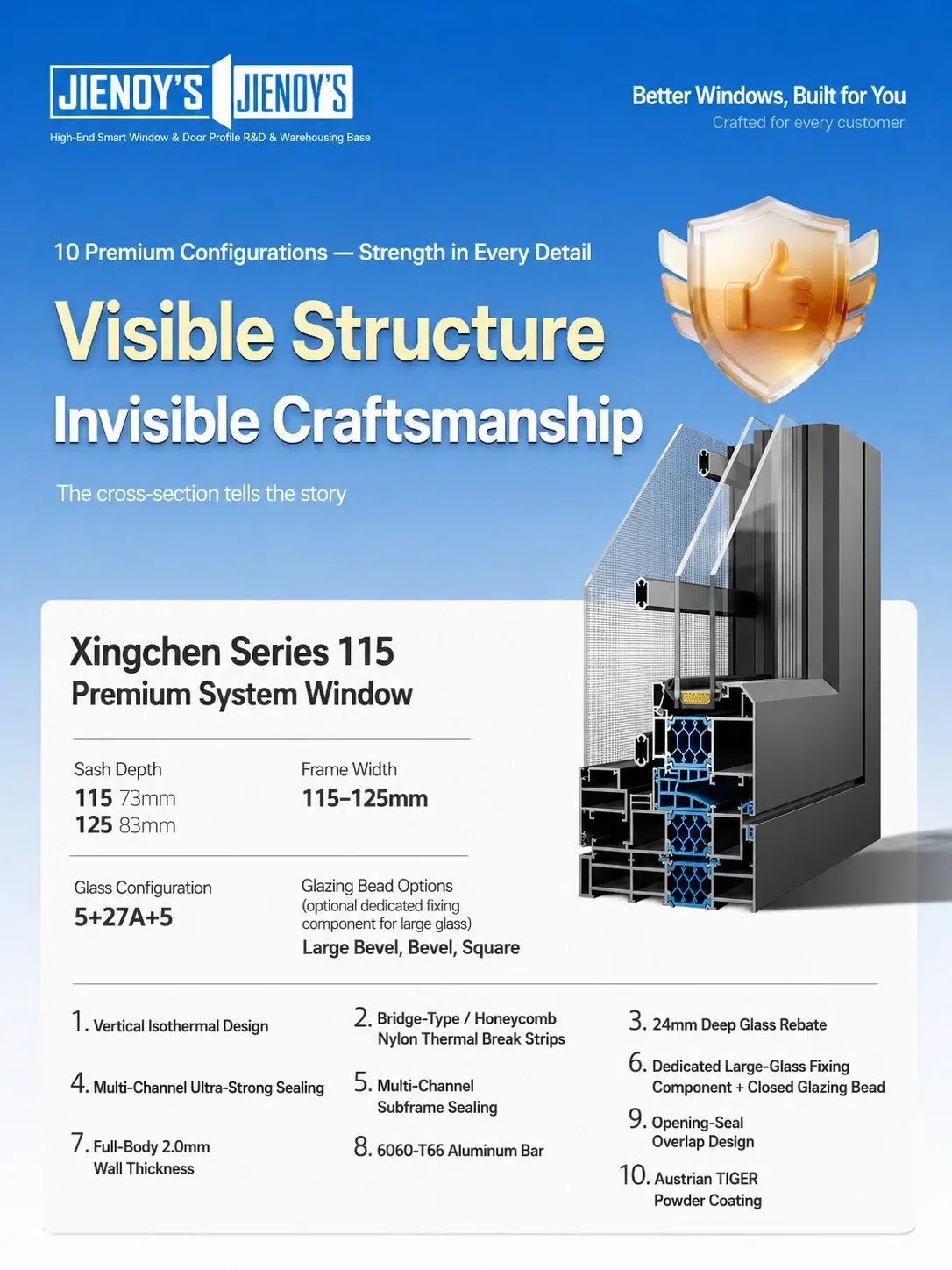
Xingchen 115 uses a 115-125mm frame platform, giving the system room for these functional elements. Ask for profile drawings, mating-section details, tolerances and the relationship between frame, sash, bead, thermal break and seals.
2. Confirm actual wall thickness
Nominal system size does not reveal the amount of structural aluminum in critical areas. Xingchen 115 specifies a full-body 2.0mm wall thickness to improve rigidity, connection strength and stability. Buyers should confirm the actual measuring method, tolerance and whether the specified thickness applies across the complete family of mating profiles.
3. Review alloy, temper and engineering together
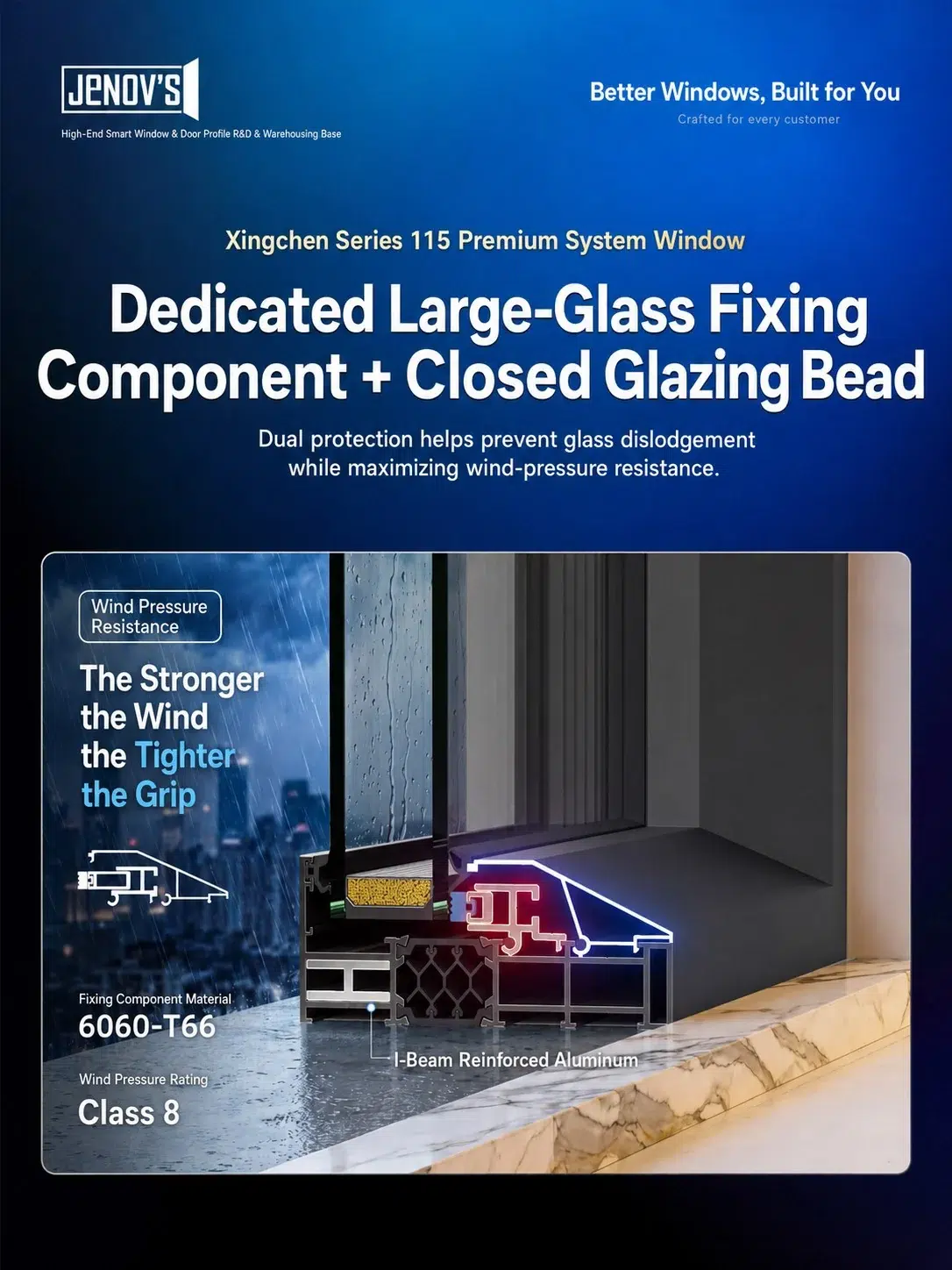
The product configuration shown for Xingchen 115 uses 6060-T66 aluminum. Many international buyers search for 6063-T5 profile extrusion because it is widely used for architectural applications. Neither designation should be treated as a complete performance guarantee.
The alloy and temper must be assessed with section geometry, wall thickness, extrusion accuracy, thermal breaks, reinforcement, hardware loading, glass support, pretreatment and fabrication. An aluminum extrusion source factory should be able to explain these relationships clearly.
4. Check thermal-break construction
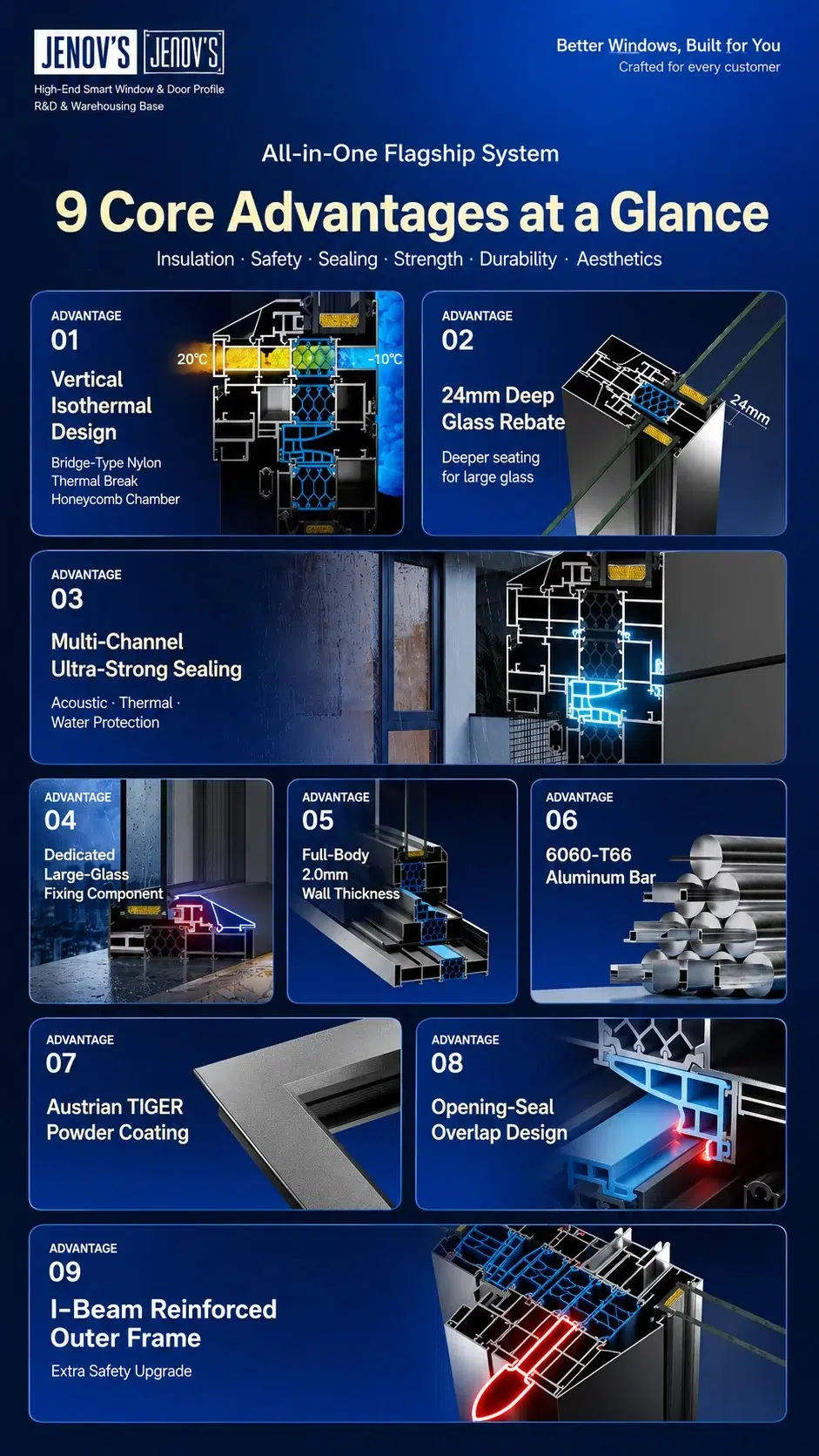
Xingchen 115 combines a vertical isothermal design with bridge-type and honeycomb nylon thermal-break structures. These features interrupt the direct path between outdoor and indoor aluminum while adding chambers to the profile.
Ask the supplier to identify the insulation material, assembly process, shear resistance, dimensional control and compatibility with the selected coating. When thermal performance is contractual, use tested complete-window values for the selected glass and dimensions.
5. Inspect glass support and reinforcement
Contemporary architecture often requires wide or tall glazing. Xingchen 115 uses a 24mm deep glass rebate, approximately 7mm deeper than the 17mm reference shown in the source material. A dedicated large-glass fixing component, closed glazing bead and I-beam reinforced outer frame provide additional support.
These features do not replace project engineering. Maximum sash size, glass thickness, hardware capacity and reinforcement must still be calculated for wind pressure, aspect ratio and installation conditions.
6. Assess air, water and acoustic sealing
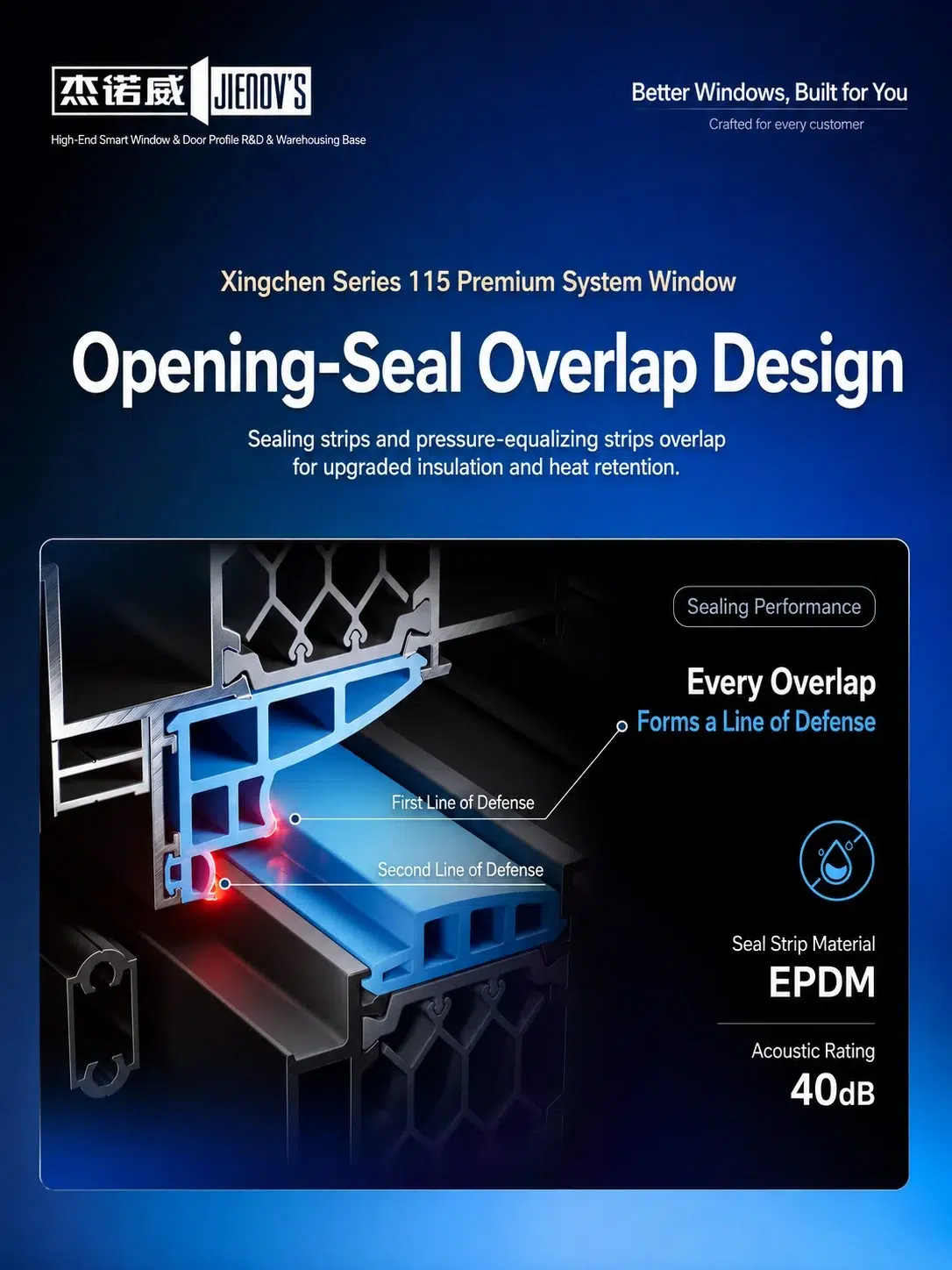
A premium exterior window needs several coordinated sealing lines. Xingchen 115 uses multi-channel sealing, EPDM gaskets and an opening-seal overlap design. The overlap creates multiple contact zones instead of relying on one gasket to resist every condition.
The system is designed for acoustic performance of up to approximately 40 dB, depending on the chosen glass, finished-window configuration, fabrication and installation. Request test reports and confirm that the tested specimen matches the proposed project configuration.
7. Verify surface-treatment specifications
Xingchen 115 uses Austrian TIGER premium weather-resistant powder coating. The finish is designed for refined appearance and resistance to exterior fading and chalking. The system specification references up to approximately 20 years under suitable pretreatment, coating application, exposure and maintenance conditions.
Ask for finish samples, color control, film-thickness targets, pretreatment details, relevant test standards and the written project warranty. Coastal, industrial and high-UV sites may require additional specification.
8. Compare source-factory support
A capable aluminum extrusion source factory should support design review, dies, extrusion, thermal-break assembly, machining, surface finishing, sample approval, inspection, packaging and repeat-order control. Direct communication with the production team is especially valuable for custom sections and high-volume B2B projects.
Review MT Flying’s architectural aluminum profiles, custom extrusion service and window and door profile systems when preparing a sourcing package.
A practical supplier checklist
- Provide project drawings, opening sizes and performance targets.
- Confirm alloy, temper, wall thickness and extrusion tolerances.
- Review thermal breaks, seals, glass support, drainage and hardware interfaces.
- Match test evidence to the proposed complete-window configuration.
- Approve finish samples, packaging and inspection criteria before production.
- Record the project-specific warranty and maintenance requirements in writing.
Related MT profile solutions
MT Flying can coordinate an architectural aluminum profile, a performance-focused window profile, a minimalist indoor profile and a decorative cabinet profile. Send your extrusion drawings, annual quantity, required finish, fabrication scope and destination market for a source-factory assessment.