BAU China & FBC China 2026 · Visitor guideBeijing, by design.
A considered guide to BAU China and FBC China 2026, 28–30 October in Beijing — for visitors sourcing windows, doors, facades and aluminum systems. Find the halls. Discover the details.
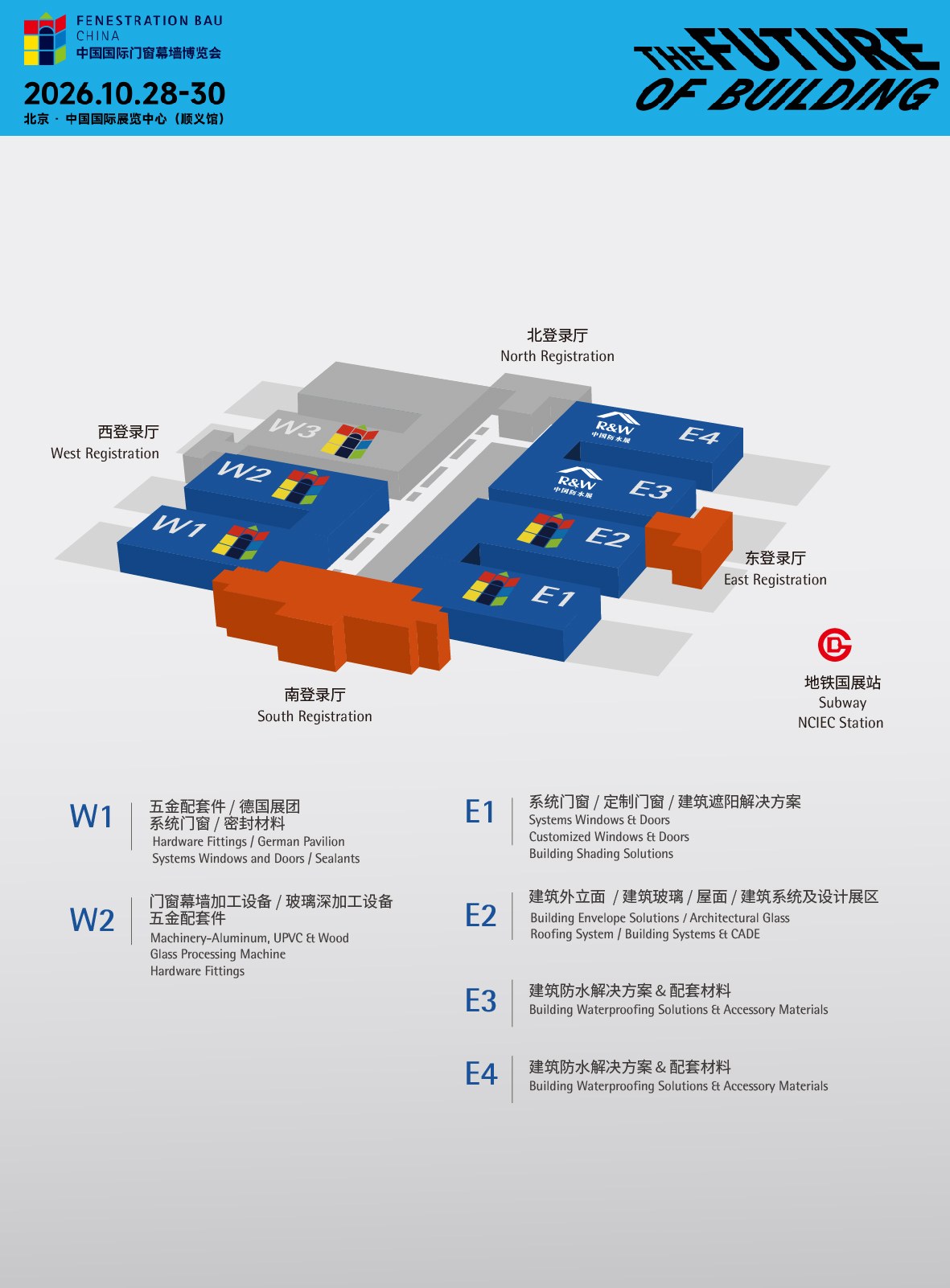
The BAU China and FBC China halls, read at a glance. Start with the hall that fits the project, then explore the connections. Windows and doors sit in E1, architecture and CADE in E2, components and hardware in W1, processing equipment in W2. Select a hall to see its focus.
N ↑
W3SEE PROGRAMME
CENTRAL AXIS
SOUTH REGISTRATION ↑
Hall relationships are schematic. Follow current on-site signage.
E1
Windows, made complete.
System windows · Custom windows · Sun shading
Look beyond the finished frame. Compare opening types, joints, thresholds and shading integration against the needs of the project.
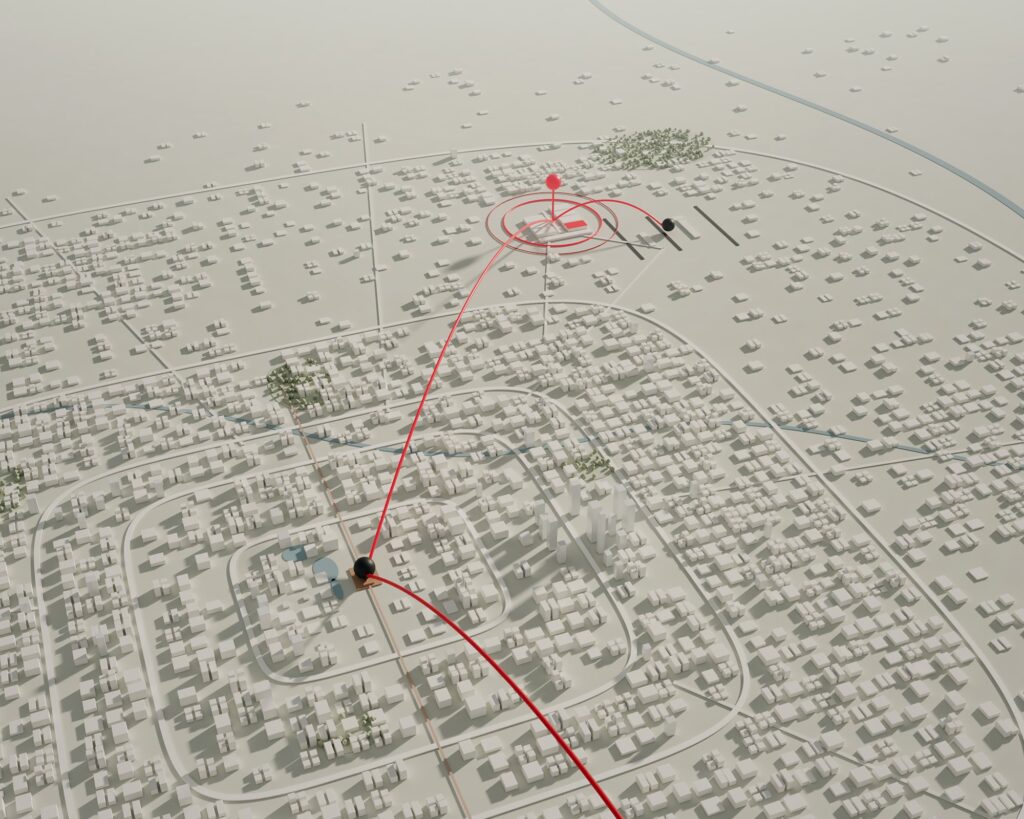
ARCHITECTURAL STUDY 01 · AI-GENERATED CONCEPT, NOT AN EXHIBITION OR PRODUCT PHOTOGRAPH
A better view. A deeper understanding.
Good design draws attention. System thinking brings it into focus.
For visitors sourcing windows, doors or aluminum profiles, the useful discoveries often sit behind the visible finish. Frame geometry, glazing, hardware and installation details belong in the same conversation. This guide follows those connections across the exhibition, then brings the questions back to a practical project brief.
03 / THE EDITOR’S SHORTLIST · FBC CHINA HALL E1
E1. Start with the opening.
The heart of FBC China for windows and doors. A starting point for finished windows, opening systems and emerging ideas. These selected stops are drawn from the E1 floor plan; the sequence is an editorial suggestion.
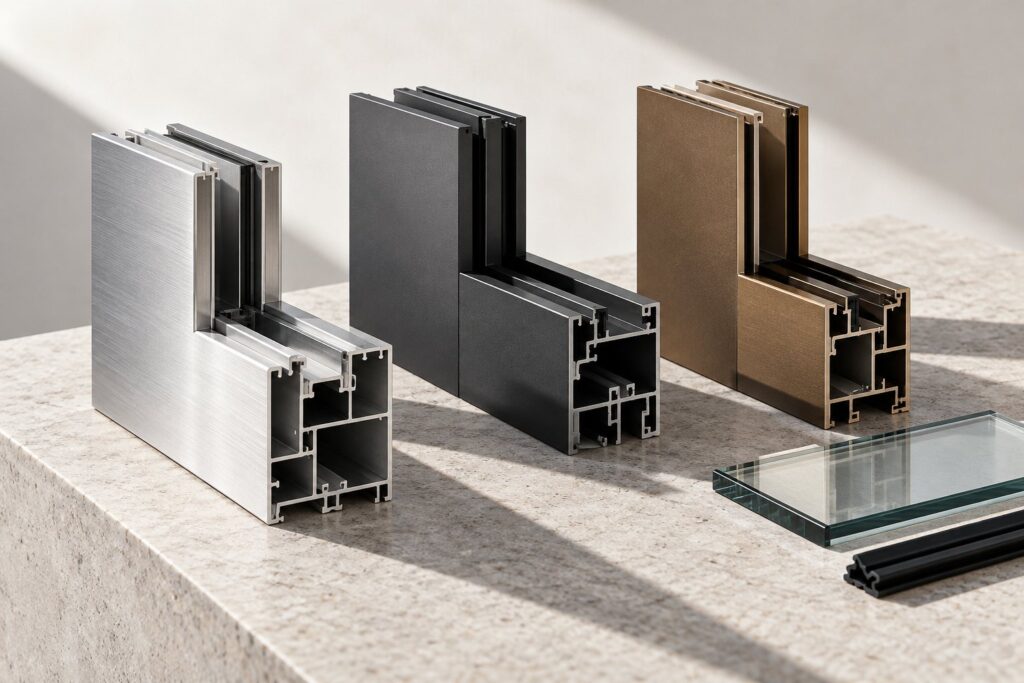
MATERIAL STUDY · AI-GENERATED CONCEPT
E1.301
Unicorn Program Zone
Innovation & emerging solutions
Use this stop to scan emerging ideas relevant to the product line. Note what is new, then ask about sample availability, intended applications and the components needed to make the solution work.
A useful question: What changes in fabrication or installation?
E1.303 / E1.306
Compare complete systems.
Kinbon / CIVRO
Use the same comparison criteria at both stops: operation, visible frame width, corner details and thresholds. Record the exact system name before requesting further technical information.
E1.207 / E1.318
Build a useful shortlist.
WEIDUN / PROFILEX
Discuss actual opening sizes, applications and supply scope. A useful shortlist includes the documents and follow-up contacts needed for a proper comparison.
MT FLYING FIELD NOTE
Capture the whole opening, then a close-up of the connection. Record the system name, contact and missing information while the discussion is still fresh.
Windows are part of a wider building story. CADE and the envelope exhibits connect openings with facades, acoustics, materials and design.
FACADE STUDY 02 · AI-GENERATED CONCEPT
01
E2.302
Facade Lab
Facade Lab · 20 questions
The organizer describes a problem-led exhibition with full-scale mockups. Look closely at connections, corners and material junctions, then consider how the assembly is delivered on site.
02
E2.307
Beyond AI
AI & digital design
Explore how digital tools enter architectural workflows. Useful questions include what information goes in, what comes out and where professional review remains necessary.
03
E2.305
Building Acoustics
Architectural acoustics
Consider the whole space, not an isolated material. Ask how glazing, seals and installation relate to the intended acoustic outcome and the evidence behind it.
04
E2.313
Materials with purpose.
Green Star · Innovative materials
Turn a sustainability label into a specific conversation. Ask about material origin, intended applications and the supporting information available for procurement review.
05
E2.315 AREA
The fifth facade.
International roofing theme area
Read the roof and facade together. Explore how their materials and assemblies meet, then extend the visit to E3 and E4 if waterproofing is relevant to the project.
06
E2.127
Join the conversation.
BAU Congress China
Reserve time for a discussion relevant to the project. A carefully chosen session can connect product observations with broader architectural practice. Confirm sessions with the organizer.
Themes: CADE official visitor guide. Stand references: the original E2 floor plan. Viewing priorities and questions are independent editorial recommendations.
W1 · W2 · E3 · E4
Complete the picture.
Complete products are only part of the visit. Components, fabrication and waterproofing help build a more complete procurement picture.
W1
The moving parts.
Hardware · Seals · German Pavilion · System windows
Focus on compatibility: which opening types the hardware supports, how seals resolve corners, and what belongs in the complete component schedule.
Discuss the equipment in the context of the workshop. Profile compatibility, process sequence, operating requirements and service support should sit alongside the demonstration.
Ask: How does it fit the workshop?E3/4
At the building edge.
Waterproofing systems · Auxiliary materials
Consider the junctions between roofs, facades and window openings. Installation sequence, substrates and material compatibility deserve a place in the project review.
Ask: How are the interfaces resolved?
04 / A VISIT WITH INTENT
Choose your lens.
Three ways to structure a purposeful visit to BAU China and FBC China. Choose a role to reveal a suggested sequence, then save it for the day.
Compare the whole offer.
For distributors and buyers exploring their next product line. Start with finished systems, compare the supporting components, then consider the architectural application.
STOP 01 / E1
Scan the systems
Begin at E1.301. Compare opening types and complete systems.
STOP 02 / W1
Check the components
Discuss hardware, seals and the complete supply schedule.
STOP 03 / E2
Add project context
Explore glass, facades and acoustics against the intended use.
STOP 04 / Project brief
Define the requirement
Record drawings, quantities, finishes and destination.
05 / THE SOURCING CHECKLIST
Bring back answers.
Six questions turn a booth conversation into a useful brief. Check each item when the relevant information is ready.
0 / 6 items ready
06 / AFTER BEIJING
From Beijing inspiration to your next project.
For visitors turning exhibition ideas into sourcing discussions, MT Flying offers a starting point in aluminum profiles, windows and doors — factory-direct from Foshan, China.
MT Flying
Aluminum profiles. Windows. Doors.
MT Flying supplies aluminum profiles and window and door systems. A useful discussion starts with drawings, matching components and a clearly defined supply scope.
BAU China and FBC China 2026 take place from 28 to 30 October 2026 at the China International Exhibition Center (Shunyi), 88 Yuxiang Road, Shunyi District, Beijing. The event brings together BAU China, FBC China (the China International Doors, Windows and Curtain Wall Expo), CADE and R&W. Published daily hours differ across official pages, so check the registration confirmation and the latest organizer notices.
How do I get to the BAU China / FBC China venue?
+
Take Metro Line 15 to Guozhan Station. The FBC visitor guide directs visitors through Exit D toward Gate 9 and the South Registration Lobby. Beijing Capital Airport (PEK) is closer to the venue than Daxing Airport (PKX).
Which FBC China hall shows windows and doors?
+
Hall E1 focuses on system windows and doors, custom windows and building shading. Hall E2 hosts architecture, building envelopes and CADE; W1 covers hardware, seals and components; W2 covers fenestration and glass processing equipment; E3 and E4 cover waterproofing.
Where can visitors register for FBC China and BAU China?
Does MT Flying exhibit at BAU China or FBC China 2026?
+
This independent guide does not announce an MT Flying stand. For aluminum profiles, windows or doors, contact MT Flying directly by WhatsApp (+86 153 0285 6248) or email (mtflyingxct@outlook.com). The selected stops reflect editorial choices, not a partnership, representation or product certification.
Sources & editorial notes
+
Information checked on 26 October 2026. Stand numbers follow the original E1 and E2 floor plans available above. Routes, viewing priorities and procurement questions are independently edited.
The architectural and material images are AI-generated concepts, not exhibition photographs, product evidence or completed project references. Original exhibition plans and marks belong to their respective rights holders. This is an independent guide, not an organizer publication.
BAU CHINA · FBC CHINA · BEIJING FIELD GUIDE 2026An independent perspective on architecture & aluminum, by MT Flying.