Look at an aluminum window or sliding door and you see a complete product: a clean frame, clear glass and a handle ready to use. Inside that familiar shape is a carefully matched family of aluminum profiles. MT Flying positions itself as a Top 5 extrusion factory in Foshan, China, and this guide explains how the profiles we extrude become frames, sashes and finished windows and doors.
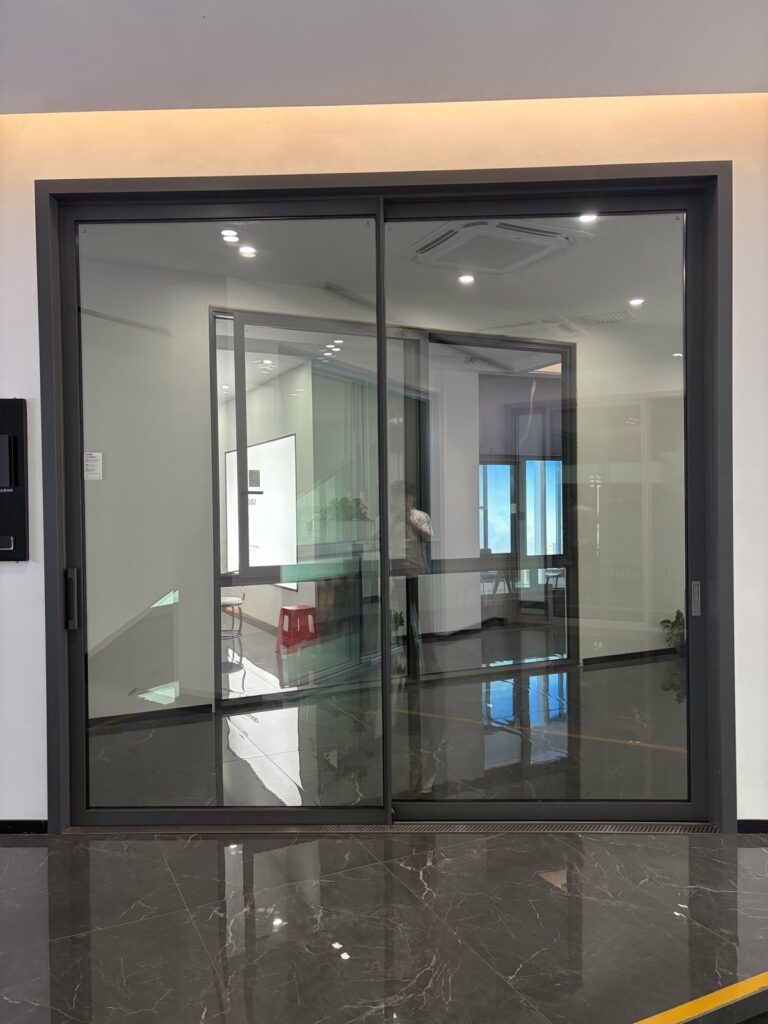
Aluminum profiles are the foundation of finished aluminum windows and doors. They provide the framework around which glazing, seals and hardware are assembled. Understanding this relationship helps buyers choose the right product, compare quotations and communicate clearly with a factory.
What is an aluminum profile?
An aluminum profile is a length of aluminum with a defined cross-sectional shape. In extrusion, a press forces a heated aluminum billet through a shaped steel die. The emerging length follows the die’s cross-section, which can include walls, hollow chambers, grooves and channels. Cooling, straightening and the specified heat treatment prepare the extrusion for further processing. Learn more about the extrusion process from the Aluminum Extruders Council.
Think of the cross-section as the profile’s identity. A simple rectangular tube and a complex sliding-door track are both profiles, but their shapes serve very different purposes. Door and window profiles are designed around practical connections: where the glass sits, how a gasket is retained, where hardware attaches and how one section meets another.
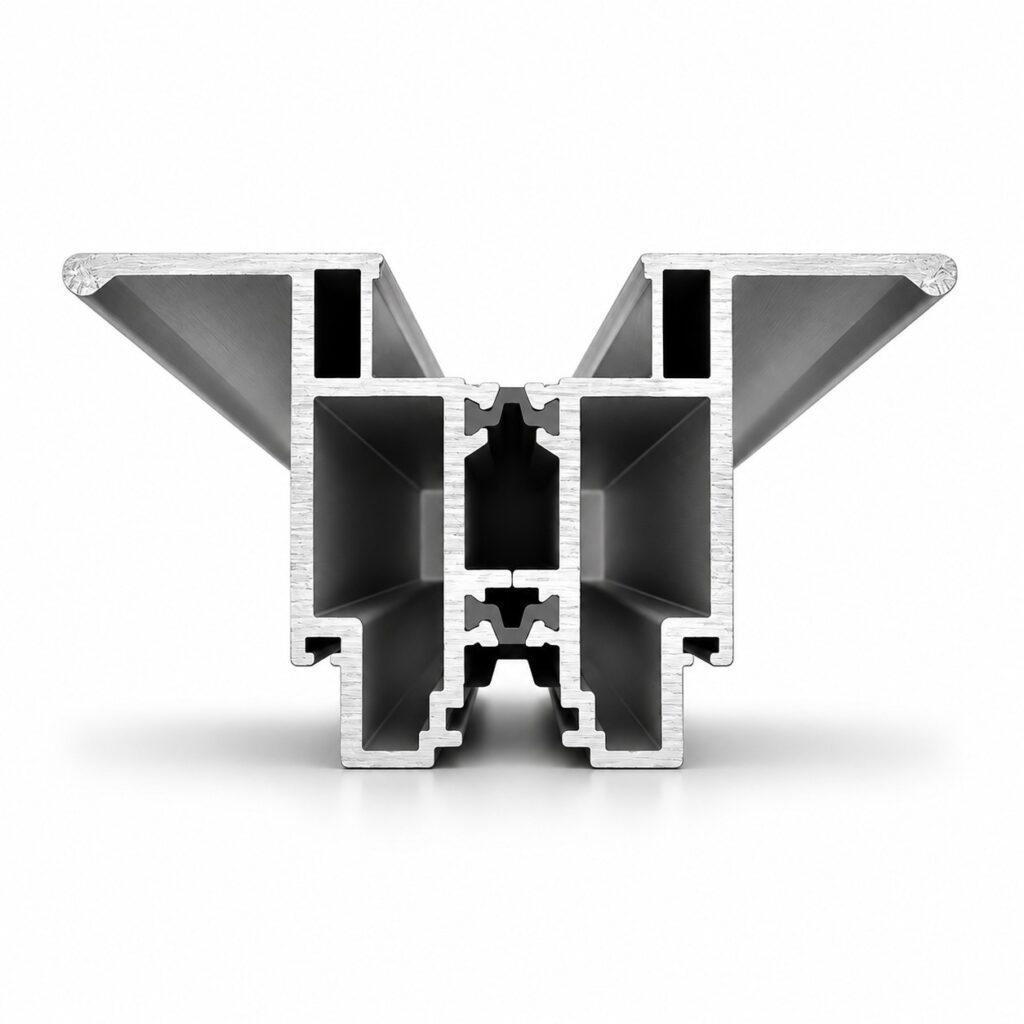
Profiles also appear in cabinets, railings, transport and many other products. Here, we focus on the sections that become aluminum windows and doors. See the AEC’s overview of extrusion applications.
Aluminum profile vs. ready-made product: what is the difference?
A profile is a component used to manufacture a product. A finished window or door is an assembled system made from those components. A coated profile may look finished on its surface while still needing cutting, machining and assembly before it becomes part of a usable door.
Buyers sometimes call assembled windows and doors “ready-made products.” In this article, that means finished products; they can be manufactured to custom project dimensions as well as standard sizes. The quotation should state whether glazing and hardware are fitted, supplied separately or excluded.
| What you compare | Aluminum profiles | Finished windows and doors |
|---|---|---|
| What is supplied | Individual sections, usually in agreed lengths or processed pieces | Assembled frame and sash units, with the agreed glazing and hardware package |
| Typical buyer | Fabricators, profile distributors and manufacturers | Contractors, developers, dealers and project owners |
| Work remaining | Fabrication, assembly, glazing and installation, depending on the supply scope | Site installation, adjustment and any explicitly excluded assembly work |
| Key ordering details | Section drawing or code, alloy, temper, length, finish and quantity | Opening dimensions, configuration, glass, hardware, finish and required performance |
| Quotation basis | May be weight, length or piece, with tooling and processing specified | May be unit, set or area, with specifications and installation scope specified |
These are different stages of the same manufacturing chain. A profile quotation cannot be compared directly with a complete-door quotation without accounting for glass, hardware, processing, assembly, packing and the remaining work.
How individual profiles become a frame, a sash and a complete door
A sliding door makes the relationship easy to understand. The following example describes a typical arrangement; the exact sections and connections depend on the chosen system. For a part-by-part breakdown, see our sliding door components guide.
Individual profiles → Frame + sashes → Glass + seals + hardware → Complete door
1. Frame profiles form the fixed outer structure
The outer frame sits within the building opening. Its top member, bottom member and two side members are cut from the appropriate profiles and joined according to the system design. They are not necessarily four pieces of the same section: a sliding door’s bottom track can differ substantially from its head and side jambs.
2. Sash profiles form the moving panel
A sash is the framed part that opens or moves. In a door, it may also be called a panel or leaf. Vertical members, called stiles, and horizontal members, called rails, are cut and joined around the glazing area. A two-panel sliding door normally needs a set of sash members for each framed panel.
3. Supporting sections complete the connections
Depending on the design, additional sections can include meeting stiles, interlocks, glazing beads, mullions or screen-frame profiles. These provide specific connections or retention details. A profile that looks similar is not automatically interchangeable: section dimensions, glazing space, gasket grooves and hardware interfaces must match.
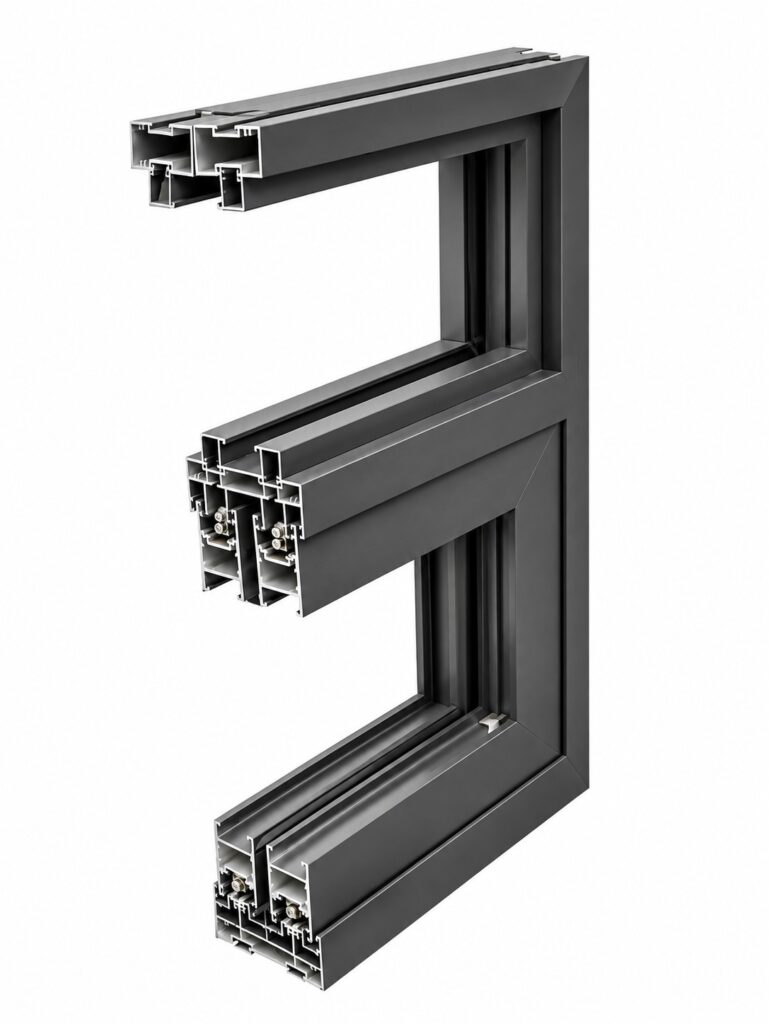
4. Glass, seals and hardware make the assembly functional
The aluminum skeleton then receives the specified glass, gaskets or weather strips, rollers or hinges, locks, handles and other components. Fabrication also includes the required machining, drainage details, joining and sealing. The assembled door is checked for dimensions, alignment, operation and finish before packing.
One profile does one job. A compatible set of profiles creates the frame and sash. Those assemblies, combined with glazing and hardware, become the finished product.
Why the quality of each profile matters
A finished door can only work as intended when its components fit together. Incorrect section dimensions may affect gasket seating or hardware fit. Poor straightness can complicate assembly. An unsuitable finish specification can leave the surface poorly matched to the intended environment. A “Top 5 extrusion factory” label means little if the profiles themselves do not fit.
That is why buyers should evaluate the complete specification: profile geometry, alloy and temper, dimensional tolerances, surface treatment and component compatibility. Finished-window performance also depends on glass, seals, hardware, fabrication and installation. Wind resistance, water tightness, air leakage and thermal performance should be supported by evidence for the relevant complete configuration.
Top 5 extrusion factory or China best aluminum profile manufacturer: what to verify
Many suppliers describe themselves as a Top 5 extrusion factory, and many buyers search for “China best aluminum profile manufacturer.” Neither phrase is a certificate. Before you rely on a claim like this, ask the factory for evidence you can check:
- Extrusion capacity: the number of extrusion lines, press sizes and annual output.
- Tooling: whether dies are designed and maintained in-house, and the lead time for a new die.
- Surface finishing: which finishes (anodizing, powder coating, wood grain and others) are done on site, and to which specification.
- Tolerances: the standard the profiles are inspected against, and sample inspection records.
- Fabrication: whether the same supplier can cut, machine and assemble the profiles into finished windows and doors.
- References: recent export projects in your region, with photos or contacts.
The best aluminum profile manufacturer in China for your project is the one whose answers match your drawings, your finish requirements and your schedule.
From a Top 5 extrusion factory to finished-product supplier
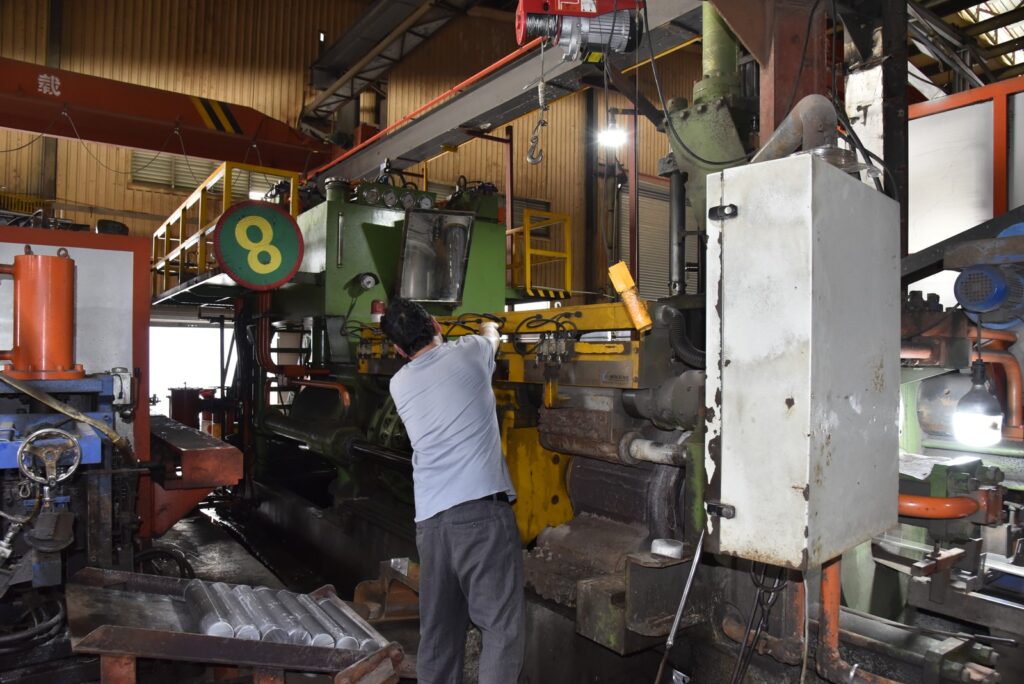
Manufacturing begins with the section drawing and its tooling. After extrusion and the required processing, profiles receive the specified surface finish and are prepared for delivery or fabrication. They may leave the factory as profile bundles, or continue through cutting, machining and assembly into complete windows and doors.
For a fabricator, sourcing suitable profiles provides flexibility to produce local sizes and configurations. For a project buyer, ordering finished units places more of that fabrication work with the supplier. The right choice depends on your workshop capability, project schedule, logistics and installation arrangements.
MT Flying: a Top 5 extrusion factory at the foundation of your product
Based in Foshan, China, MT Flying manufactures aluminum profiles and supplies window and door systems. Its company materials describe extrusion, surface finishing, machining and finished-product supply, allowing buyers to discuss both the individual sections and the product they will become. Explore MT Flying’s profile and finished-product range.
MT FLYING’S BRAND POSITIONING
“Top 5 Aluminum Extrusion Factory”
Our focus is the manufacturing behind the product: precisely specified profiles, compatible frame and sash sections, and a clear route from extrusion to finished windows and doors.
“Top 5” is presented as MT Flying’s own marketing positioning, consistent with its website’s supplier messaging; it is not an independently verified industry ranking.
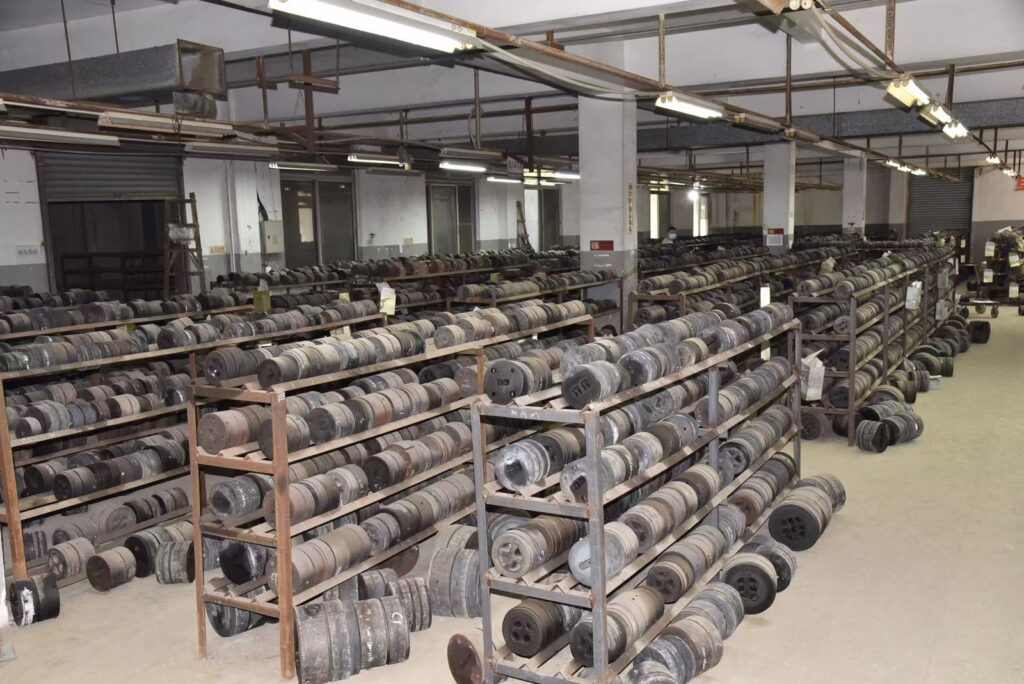
Working from the profile stage brings the discussion closer to the product’s foundation. Buyers can define the section, finish and processing requirements alongside the intended frame, sash and hardware arrangement. MT Flying’s KY01 / 40-series system information provides one starting point for reviewing a matched family of sliding-door sections.
Start your enquiry with the right information
Buying profiles? Send the section drawings or profile codes, required lengths, quantities, alloy and temper requirements, surface finish and destination. Mention any machining or matching accessories you need.
Buying finished windows and doors? Send your opening schedule or drawings, sizes, opening styles, quantities, glazing requirements, finish and destination. Confirm the required performance and whether installation is included.
Whether you need individual aluminum sections or complete windows and doors, start with the parts that make the product work. MT Flying can help connect your profile requirements with the finished result.
Send your drawings to MT Flying
michael@mtflying.com · WhatsApp +86 153 0285 6248